Most investors size up a founder and ask themselves one question: can I
outthink this person? The logic is understandable. Capital comes with an advantage, and that advantage feels safest when you believe you hold an intellectual edge over the person spending your money. Boards are stacked with generalists who pride themselves on pattern recognition, on seeing what the operator supposedly cannot. The assumption, rarely stated aloud, is that the money side of the table should also be the smartest side. It isn’t always.
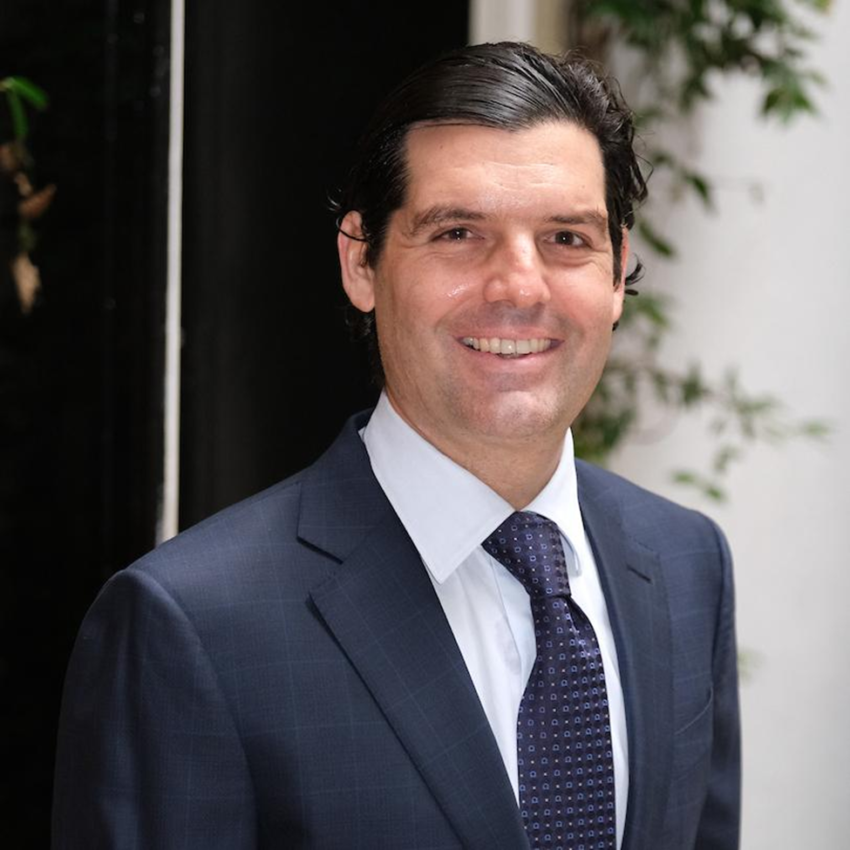
Alejandro Betancourt López takes the opposite approach. He wants to back
people who know more than he does, and he’s quite open about saying so. “When I hire people, I take a real hard look at the experience they have,” Betancourt López has said. “I like to know that they know more than me, that they’re better than me, that they have better knowledge than me on that industry.” That admission runs against every instinct drilled into private equity professionals and business school graduates. Yet across eyewear, fintech, ride-sharing, and artificial intelligence, it has produced a portfolio that keeps compounding. The question worth examining is why.
The 10,000-Idea Problem
Betancourt López frames his thesis bluntly: “There are 10,000 good ideas
out there. But not all of them come to be a successful venture because there are many factors that make them successful. The most critical one is the people.” The statement is deceptively simple. Plenty of investors would nod along, then spend the next three months buried in spreadsheets modelling unit economics and total addressable markets. Betancourt López starts somewhere else entirely. He starts with the management team, and he does it before the financials hit the table.
“The first thing I look at is the management, their philosophy and the way they function,” as he’s explained. “That’s what makes a difference there. I always like to meet the key people and see if they are good entrepreneurs.” It’s a screening method, plain and simple. Before a single revenue projection is reviewed, he’s making a binary call on whether the humans behind the venture can execute under pressure, adapt when conditions shift, and hold a team together through the difficult early years. The financial model comes second. The people come first.
His education supports the rigour behind this instinct. Betancourt López
studied Economics and Business Administration at Suffolk University before completing an Executive MBA at Oxford. The formal training gave him the analytical toolkit to evaluate deals on their numbers. What it also gave him, apparently, was the self-awareness to recognise where that toolkit runs out. Every industry has domain-specific knowledge that can’t be mastered overnight by any generalist investor. Rather than pretending otherwise, he hires for the gap and builds around the people who fill it.
Hawkers: Letting the Operator Operate
The sunglasses brand Hawkers offers one of the clearest illustrations of
the principle at work. Hawkers began as a scrappy direct-to-consumer play, selling affordable eyewear through social media with a marketing-first mentality. Growth was explosive. The brand went from obscurity to millions of followers in months, fuelled by influencer partnerships and a pricing model that undercut established optical retailers. Structure, however, wasn’t keeping pace. The company needed to professionalise without killing the energy that had made it interesting in the first place.
Betancourt López brought in Pedro Beneyto as CEO. Beneyto came from
Alain Afflelou, one of Europe’s largest optical retail groups, and he carried deep knowledge of supply chains, retail operations, and the regulatory side of selling eyewear across multiple markets. He understood how to manage inventory at scale, how to negotiate with suppliers across borders, and how to build the operational infrastructure that separates a viral brand from a lasting business. He knew more about running an optical company than any investor could. That was precisely the point.
The hire reflected a pattern that would be repeated across different
sectors and geographies. He didn’t install a loyalist or a generalist. He found someone whose specific expertise filled a specific hole. Beneyto’s operational experience gave Hawkers the backbone it needed to scale beyond a viral marketing story and into a genuine retail brand with international reach. The founder-investor didn’t try to run the show. He assembled the cast and let them perform. It’s a distinction that sounds subtle but produces very different outcomes from the more common investor playbook of hiring friendly faces and then second-guessing them quarterly.
Auro Travel and the Regulatory Bet
Ride-sharing in Spain presented a different kind of challenge. The
regulatory environment was, and remains, notoriously difficult. Licensing requirements, municipal restrictions, and entrenched taxi lobbies have tripped up well-funded entrants who assumed that technology alone would clear the path. Auro Travel, which was backed by Betancourt López, needed founders who understood the local rules intimately, not operators parachuted in from Silicon Valley with a standard disruption playbook and a tolerance for regulatory friction.
The Auro founders understood Spain’s regulatory framework for
ride-sharing at a granular level. They knew which licences to pursue, which municipalities offered the best entry points, and how to structure a compliant service without sacrificing the user experience. This was knowledge built over years of working within the system, understanding its quirks, and building relationships with the officials who administered it. Betancourt López recognised that none of this could be acquired through a weekend briefing or a due diligence memo. His role was to provide capital and a broader commercial perspective. Their role was to do what they did better than he could.
This division of labour sounds obvious on paper. Few investors practise
it consistently. The temptation to overrule local expertise with high-level opinions is strong, particularly when considerable capital is at stake. A board seat can feel like a licence to intervene. Betancourt López resists that temptation by design, not by accident. He selects people whose judgement he trusts and then gives them the room to exercise it, even when their decisions diverge from what a generalist playbook might suggest.
BDK Financial Group: Knowing When to Step Back
Banque de Dakar, operating under the BDK Financial Group umbrella, took
the people-first thesis into financial services in French-speaking Africa. The sector demands an unusual combination of regulatory fluency, cultural understanding, and operational patience. Banking across multiple West African jurisdictions isn’t a business where an outside investor can add value by micromanaging from a different continent and a different time zone. The local knowledge required is too deep, and the relationships too personal, for remote oversight to substitute for on-the-ground expertise.
Betancourt López assembled a team with deep roots in the region’s
financial sector. Once that team demonstrated it could execute, build client relationships, and handle the regulatory environment, he did something many investors find genuinely difficult: he stepped back. “When things fly by themselves and they go so well, you just follow them through,” he has said. The statement reveals a specific kind of discipline. It’s rarer than it might appear. Letting go of operational control requires confidence in the people you’ve chosen. It also requires the ego management to admit that your continued involvement might subtract value rather than add it.
BDK’s growth in French-speaking Africa validated the approach. The team
on the ground understood local banking customs, regulatory bodies, and client expectations in ways that couldn’t be replicated by any external advisor. They understood the rhythms of commerce in Dakar and across the region’s markets. Betancourt López provided the capital structure and governance framework. The rest was left to the people he had selected, and the results justified the trust.
The AI Investment and Staying Curious
More recently, Betancourt López has turned his attention to artificial
intelligence, a field where the knowledge gap between investor and technologist can be vast. AI ventures live and die by the quality of their technical teams: the researchers who design models, the engineers who deploy them at scale, the product managers who translate raw capability into something a customer will pay for. An investor who pretends to understand transformer architectures as well as the engineers building them isn’t fooling anyone, least of all the engineers.
“It isn’t just about technology; it’s about finding new ways to create value,” Betancourt López has noted. The comment signals that his interest in AI isn’t trend-chasing. He applies the same filter he uses everywhere else. Can the team execute? Do they understand their domain better than he does? Are they motivated by the problem itself, not merely the availability of funding? These questions matter more than a pitch deck’s projections about market size, because market size means nothing if the team can’t build the product.
His broader investment platform, O’Hara Administration, spans private
equity, venture capital, and commercial real estate. Across all of these verticals, the same logic holds. The sector changes; the selection criterion does not. “I like motivated people. I like talented people. I’m a true believer in teams,” he has said. “Nobody’s a single player who makes everything happen by itself. If you want to be substantial and make an impact on whatever you’re trying to achieve, you are going to need the right team.” The consistency of that message, repeated across years and contexts, suggests it is more than rhetoric. It’s an operating system.
The Myth of the All-Knowing Executive
Betancourt López has been direct about what he considers the biggest
misconception in corporate leadership. “The biggest myth is that C-Suite success comes from having all the answers,” he has said. “In reality, it comes from asking the right questions and building teams that can find those answers.” The distinction matters. Leaders who believe they must have every answer tend to bottleneck their organisations. They don’t scale. Leaders who focus on assembling the right people and asking the right questions tend to build organisations that can function, and grow, without depending on a single mind at the top.
“Great ideas require great people to execute them,” he told Authority Magazine. “Every successful venture I’ve been part of succeeded because we assembled the right team.” The word “assembled” is doing important work in that sentence. It implies curation, selection, deliberate construction. It’s a claim of judgement about others, which is a fundamentally different skill. Many executives struggle to make that distinction. Betancourt López seems to have made it early in his career, and it has shaped every major investment decision since.
What This Looks Like in Practice
A people-first investment philosophy sounds appealing in a magazine
profile. Making it operational is harder. It means saying no to opportunities where the idea is brilliant but the team is weak. It means accepting that your own expertise, however broad, has limits that can’t be papered over with confidence. It means hiring people who will challenge your assumptions rather than confirm them, and then giving those people genuine authority rather than a title with invisible guardrails.
Betancourt López has built a portfolio across continents and industries
by holding to a single filter. The sunglasses brand needed an optical industry veteran; he found one. The ride-sharing company needed regulatory specialists; he backed them. The African bank needed local financial expertise; he hired it and stepped aside when the team proved capable. Each decision followed the same logic, applied to radically different contexts, and each produced results that validated the approach.
The investors who struggle most are often those who confuse capital with
competence. Money can open doors, fund prototypes, and sustain operations through lean quarters. What it can’t do is replace the person who understands the customer, the product, or the regulation better than anyone else in the room. Alejandro Betancourt López figured that out early, built a system around it, and has repeated it with enough consistency that luck alone can’t explain. The people he chose earned those returns.