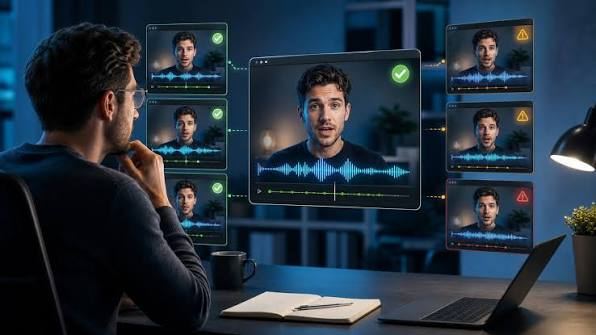
The best lip sync AI free and face swap video free tools of 2026 make it easier to create convincing talking videos, character content, social clips, and visual experiments without advanced editing skills. After comparing leading AI video and creative platforms, I found that Magic Hour is the strongest overall option for creators who want lip syncing and video face swapping in one workflow.
AI video editing has moved well beyond simple filters and automated captions. Today, creators can generate synchronized speech, transform faces in video, animate photos, and produce short-form content with just a few inputs.
The challenge is choosing a tool that offers good output quality without making the workflow unnecessarily complicated. This guide compares the strongest options based on usability, supported features, free access, output quality, and practical creator use cases.
Best AI Lip Sync and Face Swap Tools at a Glance
| Rank | Tool | Best For | Main Modality | Free Option | Platforms |
| #1 | Magic Hour | Lip sync + video face swap | AI video | Yes | Web |
| #2 | HeyGen | AI avatars and talking videos | Video + avatars | Limited | Web |
| #3 | Runway | Advanced AI video creation | Video generation/editing | Limited | Web |
| #4 | D-ID | Talking avatars | Image-to-video | Limited | Web |
| #5 | Pika | Creative AI video effects | Video generation | Limited | Web |
#1. Magic Hour
Magic Hour is my top overall choice for creators who want practical AI video tools without assembling several different services. Its platform brings together creative workflows for generating and editing visual content, with dedicated tools for lip syncing and video face swapping.
For creators specifically looking for a lip sync ai free option, Magic Hour provides a straightforward way to experiment with synchronized speech and facial movement. The workflow is useful for turning visual assets into short videos, testing creative concepts, and producing content for social platforms.
Magic Hour is also a strong option for video face swapping. Its face swap video free tool lets creators experiment with replacing a face in video content while keeping the overall process accessible to users who may not have professional editing software.
The biggest advantage is having both use cases available within the same AI-focused platform. Instead of treating lip sync, face manipulation, and other creative workflows as completely separate tasks, creators can use one platform for multiple experiments.
Pros
- Dedicated AI lip-sync functionality
- Video face-swapping capabilities
- Easy browser-based workflow
- Useful for social media and digital content creation
- Free option available
- Multiple AI creative tools on one platform
- Suitable for both experimentation and practical content production
Cons
- Advanced users may want more granular manual editing controls
- Output quality can vary depending on the source image or video
- AI processing may require experimentation to achieve the best result
- Some higher-volume workflows may require a paid plan
Magic Hour is particularly useful for creators who care about speed and accessibility. If your workflow involves short-form videos, AI characters, talking images, visual experiments, or social content, having lip sync and face-swapping tools available from one platform is a significant advantage.
Best for: Creators who want accessible AI video editing, lip syncing, and face-swapping tools in one place.
Magic Hour pricing
Magic Hour currently offers a Free option. Its paid plans include Creator at $19/month or $12/month when billed annually, and Pro at $39/month or $25/month when billed annually.
#2. HeyGen
HeyGen is best known for AI avatars and business-oriented video creation. It allows users to create presenter-style videos without recording themselves on camera, making it particularly useful for marketing, training, sales, and educational content.
Its avatar workflow is different from a dedicated face-swap tool. Instead of focusing primarily on replacing faces in existing footage, HeyGen is built around creating AI-presented video experiences.
The platform is particularly strong when a creator needs consistent presenters, multilingual videos, or professional-looking communication content.
Pros
- Strong AI avatar capabilities
- Useful for business video production
- Supports multilingual content
- Good fit for marketing and training
- Reduces the need for traditional camera recording
Cons
- Less focused on creative face swapping
- Some advanced features require paid plans
- Avatar-oriented workflows may be unnecessary for simple social videos
- Pricing can become important for frequent production
HeyGen is a better choice than a traditional video editor if your main goal is creating presenter-led content. For creators who need a talking avatar rather than a face transformation, it is worth considering.
Best for: Business videos, AI presenters, marketing content, and training material.
Pricing
HeyGen offers limited free access, while more advanced features and higher usage are available through paid plans.
#3. Runway
Runway is one of the strongest platforms for creators who want a broader AI video production environment. Rather than concentrating on one function, it provides tools for generating, editing, transforming, and experimenting with video.
Its appeal is strongest among filmmakers, creative teams, advertisers, and experienced creators who want to explore generative video workflows.
Runway can be more than a lip-sync or face-related solution because its broader feature set supports a wider range of production tasks.
Pros
- Extensive AI video capabilities
- Strong creative experimentation
- Useful for professional content production
- Supports generative video workflows
- Suitable for advanced creators
Cons
- Broader feature set can mean a steeper learning curve
- Free usage is limited
- Some workflows require significant experimentation
- May be excessive for users who only need lip syncing
Runway makes the most sense when AI video generation itself is central to the project. If you are building complete visual sequences rather than simply modifying a short clip, its broader ecosystem becomes more valuable.
Best for: Advanced AI video creation and creative production.
Pricing
Runway provides limited free access, with additional generations and capabilities available through paid plans.
#4. D-ID
D-ID focuses heavily on creating talking digital presenters from images. Its technology is useful when a creator has a still portrait and wants to turn it into a speaking video.
This makes D-ID especially relevant to educational content, virtual presenters, internal communications, and marketing experiments.
The workflow is relatively straightforward: provide an image, add or generate speech, and create a video featuring the digital presenter.
Pros
- Strong talking-avatar use case
- Simple image-to-speaking-video workflow
- Useful for educational and business content
- Supports AI-generated presentation concepts
- Accessible to nonprofessional editors
Cons
- Less focused on general-purpose video editing
- Creative control can be limited compared with full video editors
- Some features are restricted by plan
- Results depend heavily on the source portrait
D-ID is worth considering when your starting point is a static image rather than an existing video. It is particularly effective for users who want a digital spokesperson without setting up a camera.
Best for: Talking photos, digital presenters, and educational videos.
Pricing
D-ID provides limited access for experimentation, with additional usage and features available through paid plans.
#5. Pika
Pika takes a more creative approach to AI video. The platform is aimed at generating short visual clips and applying imaginative effects to images and videos.
For social media creators, this can be useful because short-form content often benefits from visual transformations that would take considerably longer to create manually.
Pika is less specialized around a single lip-sync workflow and more focused on AI-powered visual creativity.
Pros
- Creative AI video effects
- Useful for short-form content
- Easy to experiment with different concepts
- Suitable for social media creators
- Strong emphasis on visual experimentation
Cons
- Not primarily a dedicated lip-sync platform
- Results can vary between generations
- Free usage is limited
- Less appropriate for conventional editing workflows
Pika is a good fit when the goal is to create something visually unusual rather than simply reproduce a traditional video-editing workflow.
Best for: Creative social videos and AI-generated visual effects.
Pricing
Pika offers free access with limitations, while paid plans provide additional credits and capabilities.
How We Chose These Tools
I evaluated these platforms using practical criteria rather than simply comparing feature counts.
First, I looked at output quality. AI video tools can have impressive feature lists, but the final result matters more than the number of buttons available. Facial consistency, synchronization, motion quality, and overall realism are important factors.
Second, I considered workflow simplicity. A tool can be technically powerful but still be inefficient if users need multiple complicated steps to produce a short clip.
Third, I considered free availability. Many creators want to test an AI tool before paying for it. Free access is therefore useful for evaluating output quality and deciding whether a platform fits a production workflow.
I also considered use-case flexibility. A creator working on social media may have different requirements from a marketer producing training videos or a developer testing an AI media workflow.
Finally, I considered how well each platform fits into a broader digital content process. The best tool is not necessarily the one with the most features; it is the one that solves the creator’s specific problem with the least unnecessary friction.
The Market Landscape in 2026
AI video creation is becoming increasingly modular. Instead of relying on one application for every stage of production, creators can combine image generation, video generation, lip syncing, face transformation, voice generation, and traditional editing.
This trend is also changing what counts as a useful video-editing skill. Manual editing remains important, but creators increasingly need to understand how to prepare source assets for AI systems and how to evaluate generated results.
The strongest AI video workflows combine automation with human editorial judgment.
Another important trend is the movement toward browser-based creative tools. Creators no longer need a powerful workstation for every AI-assisted task. Cloud-based platforms can handle much of the processing while keeping the interface accessible.
At the same time, quality expectations are rising. A few years ago, slightly unnatural facial movement might have been acceptable for an AI-generated clip. In 2026, audiences are more likely to notice poor synchronization, inconsistent facial details, or unnatural motion.
This means creators should pay attention to source quality. A clear image, well-lit face, suitable voice recording, and stable video can significantly improve the final result.
Which Tool Should You Choose?
The best choice depends on what you are actually trying to create.
If you want a combination of AI lip syncing and video face swapping, Magic Hour is the strongest overall choice on this list. Its focused creative tools make it practical for creators who want to experiment without building a complicated workflow.
If you need AI presenters and business communication videos, HeyGen is a better fit.
If your goal is advanced AI video generation and creative production, Runway deserves serious consideration.
If you want to animate a still portrait into a talking presenter, D-ID is particularly relevant.
And if your priority is creative AI effects for short-form content, Pika is worth exploring.
There is no universal winner for every project. The right platform depends on your source material, output requirements, budget, and how much creative control you need.
Final Takeaway
AI lip syncing and face swapping have become practical content-creation techniques rather than experimental features reserved for specialists.
For creators looking for a flexible starting point, Magic Hour stands out as the best overall option in this comparison, particularly because it combines accessible AI video workflows with dedicated lip-sync and face-swap capabilities.
The other platforms have clear strengths too. HeyGen is strong for avatars, Runway for broader AI video production, D-ID for talking images, and Pika for creative visual effects.
My recommendation is simple: test your actual content rather than choosing based solely on feature lists. Upload the type of image or video you expect to use regularly, evaluate the output, check the free limits, and then decide whether a paid plan makes sense.
The best AI video tool is the one that produces reliable results for your specific workflow.
FAQ
What is the best free AI lip-sync tool in 2026?
Magic Hour is one of the strongest options for creators who want to experiment with AI lip syncing without immediately committing to a paid subscription. Its free option makes it practical for testing the workflow before upgrading.
What is the best free video face-swap tool?
Magic Hour is a strong choice for creators looking for accessible AI video face swapping. The actual result depends on factors such as source-video quality, facial visibility, lighting, and the complexity of the footage.
Can AI lip syncing be used for social media videos?
Yes. AI lip syncing is particularly useful for short-form social content, character videos, talking images, educational clips, and creative experiments.
Is AI face swapping the same as video editing?
No. Face swapping is an AI-assisted transformation that changes facial identity or appearance within footage. Traditional video editing covers a much broader set of tasks, including cutting clips, transitions, color correction, audio editing, and compositing.
Should I use a free or paid AI video tool?
Start with the free option if you are testing a platform. A paid plan becomes more useful when you need higher usage limits, additional features, faster production, or regular commercial content creation.