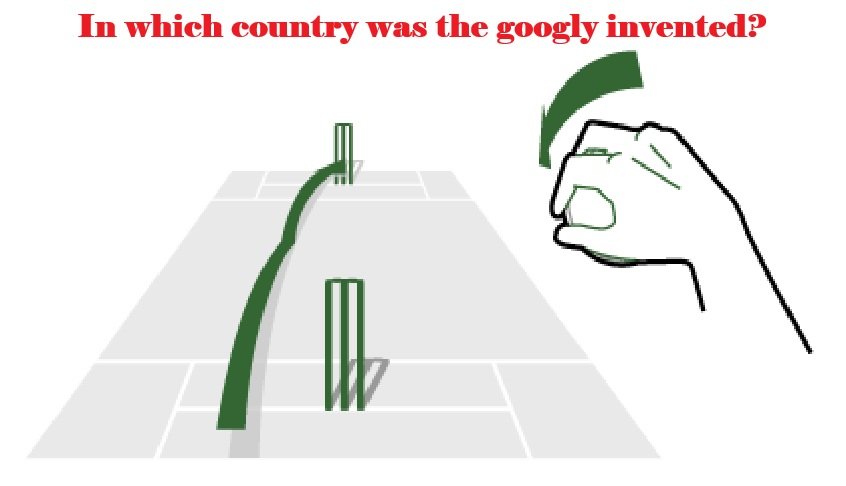
In which country was the googly invented? If you’ve ever watched an interesting cricket match, you’ve probably visible a bowler spin the ball in a manner that completely deceives the batsman — that’s the googly. It’s considered one of cricket’s most fascinating deliveries, complete with mystery, spin, and strategy.
But have you ever puzzled, “In which use of a was the googly invented?”
Let’s explore its beginning, inventor, and the way it revolutionised spin bowling all the time.
The Country Where the Googly Was Invented
The googly was invented in England during the early twentieth century.
It was created by Bernard Bosanquet, an English cricketer, around 1900.
While experimenting with a desk-top sport and wrist-spin strategies, Bosanquet by chance discovered a way to make the ball spin in the contrary direction of an ordinary leg-smash, and cricket changed into modified all the time.
Answer: The googly was invented in England by means of Bernard Bosanquet.
What Exactly Is a Googly in Cricket?
The googly is a misleading shipping bowled through a right-arm leg-spin bowler.
It seems like a regular leg-break; however, it turns inward (from off to leg) — puzzling the batsman who expects it to move in the alternative manner.
Key Points:
- Bowled through leg-spinners, the usage of a special wrist motion.
- Spins in the contrary direction of a popular leg-ruin.
- Designed to trick the batsman’s study of the ball.
In short, the googly is the art of deception — a perfect example of how intelligence and ability outline notable cricket.
The Inventor – Bernard Bosanquet (1877–1936)
Bernard Bosanquet, born in England, turned into not just a cricketer but also an experimenter.
While gambling, an indoor recreation called “twisti-twosti” — in which a ball changed into bounced off a desk — he observed that with a flick of the wrist, the ball should spin unpredictably.
He carried that motion onto the cricket area, and as a consequence, the googly turned into born.
Bosanquet’s Milestones:
- Introduced the googly in first-rate cricket in 1900.
- Used it successfully in The Ashes collection.
- Represented England in worldwide cricket.
His innovation changed the direction of bowling strategy all the time, inspiring generations of spinners.
Early Reaction to the Googly
At first, even experienced batsmen couldn’t understand what was happening.
When Bosanquet bowled it in fits, the ball seemed to wreck the legal guidelines of physics — it appeared like a leg-spin but turned the other way.
Crowds had been amazed. Umpires were stressed. Batsmen have been baffled.
Cricket newshounds soon called it the “Bosanquet transport” or “googly”, a playful time period relating to something complicated or hard to expect.
Evolution of the Googly Over Time
The googly quickly spread beyond England and became an international phenomenon.
Early 1900s – England’s Innovation
- Bosanquet delivered it in county cricket.
- English spinners experimented with variations.
Twenties–1950s – Adoption in India, Australia, and South Africa
- Indian bowlers like Subhash Gupte and BS Chandrasekhar mastered the art.
- South African and Australian spinners tailored it to unique pitches.
Modern Era – Wrist-Spin Revolution
- Legends like Shane Warne, Anil Kumble, and Abdul Qadir used the googly as a key weapon.
- In T20 cricket, bowlers like Rashid Khan and Yuzvendra Chahal use the googly as a wonder attack.
The Science Behind the Googly
A googly’s motion depends on wrist rotation, spin axis, and seam position.
How It Works:
- The bowler rotates the wrist counterclockwise (for proper-arm leg-spinners).
- The ball spins backwards, causing it to move inward after pitching.
- The seam and spin axis reason air resistance asymmetry, making the ball deviate.
The combination of physics and biomechanics makes the googly one of the hardest deliveries to each bowl and play.
How to Bowl a Googly – Step-by means of-Step
If you’re studying cricket, getting to know the googly takes time and persistence.
Step 1: Grip
- Use a well-known leg-spin grip.
- Hold the seam diagonally across your hands.
Step 2: Wrist Rotation
- As you release the ball, rotate the wrist inward (opposite of a leg-damage).
- Fingers spin the ball backwards.
Step 3: Follow-Through
- Keep your palm facing closer to the batsman.
- The launch should cover the googly as an everyday leg-destroyer.
Step 4: Practice
- Focus on a consistent wrist roll.
- Record your spin angles and soar pattern.
An authentic googly is all approximately deception — it should seem like a leg-spin till the very last moment.
Famous Bowlers Known for Their Googly
| Bowler | Country | Era | Impact |
|---|---|---|---|
| Bernard Bosanquet | England | 1900s | Inventor of the googly |
| Subhash Gupte | India | 1950s | Master of wrist spin |
| Abdul Qadir | Pakistan | 1980s | Revived the art of leg-spin |
| Shane Warne | Australia | 1990s | Used subtle googlies for deception |
| Rashid Khan | Afghanistan | 2010s–present | Modern-day googly specialist |
Each of these players used the googly to outsmart international elegance batsmen — proving that it stays undying.
Impact of the Googly on Cricket Strategy
The googly modified the very dynamics of bowling.
Before its invention, batsmen had to predict spin path effortlessly. After the googly, every ball has become a guessing recreation.
Strategic Advantages:
- Keeps batsmen unsure.
- Breaks partnerships with surprise deliveries.
- Opens opportunities for wicket-taking variations.
Coaches now educate spinners to hide their googly perfectly — mixing them inside leg-breaks and top-spinners.
The Word “Googly” – Meaning and Origin
The time period “googly” is assumed to have originated in English slang, meaning something unusual or misleading.
Cricket writers within the early 1900s began using “googly” to explain Bosanquet’s new delivery because it was so surprising — nearly “cheeky” in nature.
Thus, the call stuck and became a part of global cricket vocabulary.
Global Influence of the Googly
- In India, the googly stimulated generations of leg-spinners.
- In Pakistan, bowlers like Abdul Qadir made it an art form.
- In Australia, it complemented the competitive bowling style.
- In Afghanistan, contemporary stars like Rashid Khan popularised it in T20 leagues.
Today, the googly is an important part of cricket’s DNA — performed in every format, from Tests to IPL.
Googly in Modern Cricket (T20 Era)
In constrained-overs codecs, just like the IPL, Big Bash, and T20 World Cup, the googly is used as a variation in delivery.
Bowlers like Rashid Khan, Adil Rashid, and Kuldeep Yadav depend on it to deceive batsmen looking to attack.
Because T20 needs creativity, the googly has regained significance like in no way earlier.
FAQ – In Which Country Was the Googly Invented?
Q.1. In which us of was the googly invented?
The googly was invented in England by Bernard Bosanquet around 1900.
Q.2. Who is referred to as the father of the googly?
Bernard Bosanquet is recognised as the inventor and “father” of the googly.
Q.3. What is the that means of a googly mean in cricket?
It’s a misleading ball bowled by means of a leg-spinner that spins in the contrary direction to an ordinary leg-break.
Q.4. When was the googly first utilised in international cricket?
It was first utilised in The Ashes (1902) between England and Australia.
Q.5. Which cutting-edge bowlers use the googly efficaciously?
Rashid Khan, Adil Rashid, Kuldeep Yadav, and Shamsi are recognised for his or her lethal googlies.
Q.6. Is there a left-arm model of the googly?
Yes, left-arm wrist-spinners (Chinaman bowlers) use a reverse googly with comparable impact.
Q.7. How does the googly vary from a leg-wreck?
A leg-spoiler spins far from a right-handed batsman; a googly spins in.
Conclusion
The googly — invented in England via Bernard Bosanquet — remains one of cricket’s best improvements.
More than a century later, this smart twist of the wrist continues to baffle batsmen and please fan.
From dusty pitches in India to fashionable T20 leagues, the googly is a reminder that in cricket, skill and creativity always win over predictability.
Read More:-