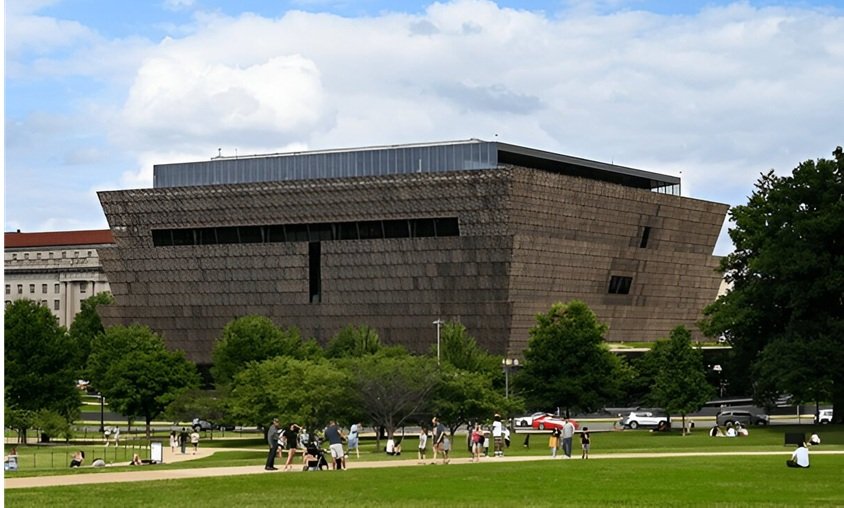
The National Museum of African American History and Culture (regularly called NMAAHC) stands proudly in Washington, D.C., as a beacon of records, resilience, and birthday celebration. It’s more than only a museum—it’s a dwelling tale that captures centuries of African American struggles, triumphs, and cultural impact on America’s identification.
Opened in 2016, the museum has quickly turned out to be one of the most visited landmarks in the U.S. Capital. From slavery to civil rights, jazz to hip-hop, literature to sports activities—the National Museum of African American History and Culture tells a story this is each heartbreaking and galvanizing.
| Field | Detail |
|---|---|
| Name | National Museum of African American History and Culture |
| Location | 1400 Constitution Ave NW, Washington, D.C., United States |
| Establishment (Congress) | Authorized 2003 via Act of Congress |
| Opening of permanent building | September 24, 2016 |
| Collection size | Approx. 40,000 objects |
| Visitor count (2022) | 1,092,552 visitors |
| Director | Kevin Young (as of latest) |
| Architect / Design team | Freelon Group / Adjaye Associates / Davis Brody Bond |
| Building size / floors | 10-story building (five above, five below ground) (Wikipedia) |
| Mission / purpose | To document, preserve, and share the history and culture of African Americans. (nmaahc.si.edu) |
The Origin and Vision Behind the Museum
The concept of a museum committed to African American records dates lower back to 1915, whilst a group of Black veterans proposed a national monument to honour African American contributions to the kingdom. However, it took over a hundred years of advocacy, legislation, and leadership for the dream to end up a reality.
In 2003, the U.S. Congress officially legal the establishment of the National Museum of African American History and Culture, underneath the umbrella of the Smithsonian Institution. After years of design, making plans, and construction, the museum was inaugurated by means of President Barack Obama on September 24, 2016—a ancient moment celebrated across the world.
The Architecture: A Symbol of Heritage and Hope
The building itself is a masterpiece. Designed by way of David Adjaye, a British-Ghanaian architect, the museum’s outdoors right now catches your eye with its precise 3-tiered form stimulated with the aid of the Yoruba crown from West Africa. The bronze-coloured lattice design will pay tribute to the complex ironwork crafted by way of enslaved African Americans inside the South.
Inside, the structure is cautiously designed to guide visitors on an emotional journey—from the darkish decrease tiers representing slavery to the brilliant, open-top floors that characterize freedom and cultural expression. The structure of the National Museum of African American History and Culture reflects the development from pain to delight, from oppression to success.
What’s Inside the National Museum of African American History and Culture
Home to more than 36,000 artifacts, the museum affords African American records thru powerful well-known shows that mix storytelling, artwork, and emotion. Every gallery is a step through time—every one telling a part of the long and complex African American journey.
Slavery and Freedom Gallery
Located on the lowest degree, this show off gives a profound and often emotional view of slavery in America—from the transatlantic slave alternate to the Emancipation Proclamation. Artifacts consist of slave shackles, auction posters, and private assets that speak volumes approximately human endurance.
Defending Freedom, Defining Freedom
This gallery covers the Civil Rights Movement and different predominant struggles for equality. Visitors can see Rosa Parks’ get dressed, snap shots from the Bernard Law Montgomery Bus Boycott, and movies capturing powerful moments from records.
Cultural Expressions Gallery
A birthday celebration of creativity, this phase showcases track, artwork, movie, and fashion that described African American subculture. From jazz and gospel to hip-hop and cinema, it highlights how Black way of life encouraged America’s artistic identity.
Sports: Leveling the Playing Field
African Americans changed the face of sports forever. Here, you’ll discover memorabilia from legends like Muhammad Ali, Jackie Robinson, and Serena Williams—reminders that skills and determination can damage any barrier.
Iconic Artifacts You Shouldn’t Miss
Some of the museum’s most famous objects consist of:
- Harriet Tubman’s hymn e book and scarf
- Nat Turner’s Bible
- Chuck Berry’s purple Cadillac
- Louis Armstrong’s trumpet
- Muhammad Ali’s gloves
- The lunch counter from Greensboro sit-ins
Each artifact contains a voice from the past—a story of ache, progress, or delight that shaped present day America.
A Space for Reflection and Education
Beyond artifacts, the National Museum of African American History and Culture offers areas designed for contemplation and gaining knowledge of.
The Contemplative Court, proposing a mild waterfall and round skylight, gives site visitors a non violent space to technique the deep emotions that the famous evoke.
The museum additionally conducts educational programs, workshops, film screenings, and circle of relatives getting to know periods—making it not simply a place of remembrance but also of inspiration for future generations.
The Museum Experience: From Past to Present
Walking thru the museum looks like traveling through time.
You start in the underground galleries—darkish, effective, and emotionally heavy—where tales of slavery, resistance, and survival spread. As you circulate upward via the levels, mild starts to pour in, and the tone shifts from oppression to empowerment.
By the time you attain the pinnacle floor, you’re surrounded by means of art, song, and creativity. The journey ends no longer with sorrow but with satisfaction and birthday party of African American brilliance and resilience.
Visitor Information: Plan Your Visit
If you plan to explore the National Museum of African American History and Culture, right here’s what you need to recognise:
📍 Address:
1400 Constitution Avenue NW, Washington, D.C. 20560
🕒 Hours:
Open each day from 10:00 AM to five:30 PM (closed on Christmas Day)
🎟️ Admission:
Free, but timed-access passes are required and can be reserved on-line at nmaahc.Si.Edu.
💡 Pro Tip:
Tickets are released earlier and can go rapid, mainly all through weekends. Booking early is enormously encouraged.
Why the Museum Matters
The National Museum of African American History and Culture isn’t just a collection of ancient items—it’s a dwelling narrative of America’s proper story. It acknowledges the ache and celebrates the development. It confronts injustice at the same time as highlighting the contributions that built the country.
The museum encourages traffic to mirror on equality, range, and harmony. It evokes empathy and appreciation for the resilience of a people whose tale is inseparable from the state’s identification.
Educational Impact
The museum serves as an invaluable academic hub for college students, instructors, and researchers.
It promotes awareness of African American history via virtual archives, interactive exhibits, and public discussions that join the past to these day’s social and cultural troubles.
Its online sources, digital excursions, and downloadable lesson plans make sure that mastering maintains beyond its physical walls.
Architectural and Cultural Awards
Since the beginning, the National Museum of African American History and Culture has acquired global reputation for its design and impact, consisting of:
- The Beazley Design of the Year Award (2017)
- LEED Gold Certification for sustainability
- Praise from architectural critics worldwide for its symbolism and cultural depth
Visitor Reviews and Experiences
Visitors often describe their experience at the museum as existence-converting. Many be aware the way it balances sorrow with pleasure, ache with development, and struggle with desire.
Families, students, and travelers from around the arena depart inspired by the museum’s message: that understanding our shared history brings us closer as a state.
Future of the Museum
The museum continues to evolve. It regularly updates well-knownshows to consist of current records — which include the Black Lives Matter motion, cultural milestones in movie and track, and new discoveries in African American family tree.
By doing so, the National Museum of African American History and Culture remains a applicable, dynamic group that bridges generations.
FAQs About the National Museum of African American History and Culture
Q1: When became the National Museum of African American History and Culture founded?
It turned into legal by Congress in 2003 and officially opened on September 24, 2016.
Q2: Where is the museum located?
It’s located on the National Mall in Washington, D.C., near the Washington Monument.
Q3: Do you need tickets to go into?
Yes, access is free however requires timed-access passes, to be had on-line.
Q4: What are the need to-see well-knownshows?
The Slavery and Freedom Gallery, Civil Rights shows, Cultural Expressions, and Sports History well-knownshows are the most popular.
Q5: Can college students and instructors enjoy the museum?
Absolutely. The museum offers instructional materials, virtual tours, and research possibilities for faculties and universities.
Q6: How long does a full go to take?
Most traffic spend 3–4 hours exploring, however records lovers may without difficulty spend an entire day.
Conclusion
The National Museum of African American History and Culture is a long way more than a constructing—it’s a non-secular and cultural adventure that invites every visitor to examine, reflect, and develop.
It celebrates stories of conflict and success, reminding us that the African American experience is the American to enjoy.
Read More:-